

From 1886 to Today: Iconic Hunter Fan Designs
For more than 140 years, Hunter Fan Company has been shaping the way homes experience comfort. What began in 1886 with the invention of the water-driven ceiling fan grew into a legacy of craftsmanship, engineering, and thoughtful design that continues today.
Over the decades, Hunter fans have done more than circulate air. They have influenced home design, adapted to changing technology, and become trusted fixtures in homes across generations. From historic cast-iron classics to modern smart fans and innovative designs like fandeliers, Hunter fans tell a story of how airflow and style have evolved together.
Let’s take a look at some of the most iconic Hunter fan designs, from early innovations to modern favorites that continue to perform in homes today.
The Hunter Original: A Foundation of Craftsmanship
When discussing iconic Hunter fan designs, the conversation almost always begins with the Hunter Original.
Introduced in 1906, the Hunter Original quickly became one of the most recognizable ceiling fans ever made. Its design was built around a cast-iron motor housing and oil-bath lubrication system, allowing the fan to run smoothly for years while maintaining reliable performance.

More than a century later, the Hunter Original remains largely unchanged. Its timeless silhouette and durable construction have made it a staple in homes, restaurants, and historic buildings. While many products come and go with changing trends, the Original proves that great engineering and classic design can stand the test of time.
The continued popularity of this fan helped establish Hunter’s reputation for quality and durability, setting the stage for decades of design innovation.
Mid-Century Influence: Fans Meet Interior Design
As American homes evolved through the mid-20th century, ceiling fans began to play a bigger role in interior design.
During the 1950s and 1960s, homeowners started thinking about appliances not just as functional tools but as elements of the room’s overall aesthetic. Ceiling fans moved beyond utility and became part of the visual experience of a space.
Hunter responded by introducing fans that blended performance with decorative styling. One notable example is the Hunter Seville, which features more detailed motor housings and decorative blade irons than earlier models. Designs like the Seville allowed homeowners to coordinate their ceiling fans with traditional furniture, lighting fixtures, and architectural details.
This shift marked an important moment in fan design. Fans were no longer simply mounted to the ceiling to move air. They became integrated into the design language of the home.
These decorative innovations helped pave the way for the versatile fan styles that would become widely popular in the decades that followed.
A Classic for Every Home: The Builder Series
Few ceiling fan designs have achieved the widespread popularity of the Hunter Builder Collection.
Known for its balanced proportions and adaptable styling, the Builder Collection quickly became a go-to choice for homeowners, contractors, and builders. Its straightforward design allows it to complement nearly any room, from traditional bedrooms to transitional living spaces.

The Builder Collection also helped cement the ceiling fan as a standard feature in American homes. With multiple finishes, lighting options, and blade styles available, it offers flexibility without sacrificing performance.
Even today, Builder Collection fans remain among Hunter’s most recognizable and widely installed designs.
Everyday Favorites: Designs That Continue to Perform
As the ceiling fan industry expanded, Hunter continued refining its designs to balance efficiency, durability, and style. Several models have become particularly popular with homeowners thanks to their versatility and reliable performance.
The Hunter Newsome is one example. With its traditional five-blade design and integrated lighting, the Newsome fits comfortably in a wide variety of spaces, from bedrooms to family rooms. Its approachable style and dependable airflow have made it a consistent favorite among homeowners.

Another standout is the Hunter Bennett, which reflects the growing popularity of industrial and modern farmhouse design. With its exposed bulbs and clean metal finishes, the Bennett offers a distinctive look while still delivering the powerful airflow homeowners expect from a Hunter fan.

Fans like the Newsome and Bennett show how Hunter continues to adapt to changing design preferences while maintaining the performance standards that define the brand.
Modern Simplicity: Fans for Contemporary Homes
Today’s homes often feature open layouts, minimalist décor, and modern finishes. Hunter has responded with fan designs that emphasize clean lines and contemporary simplicity.
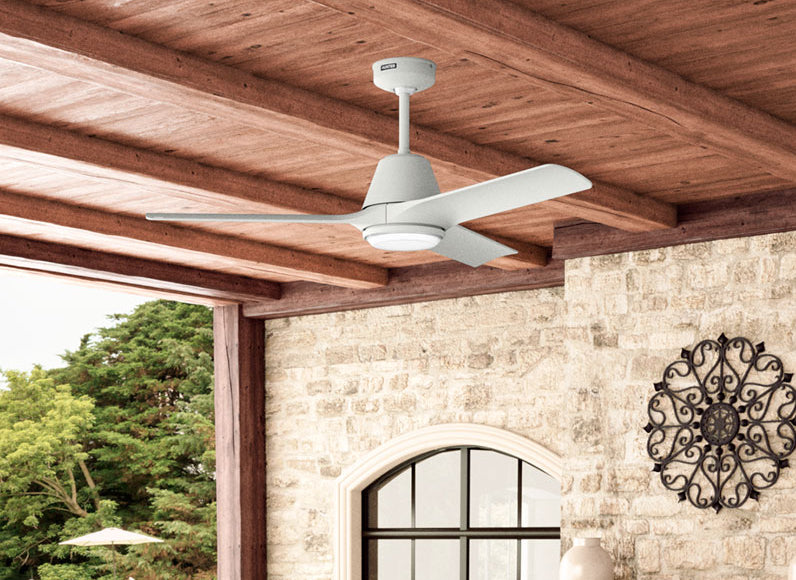
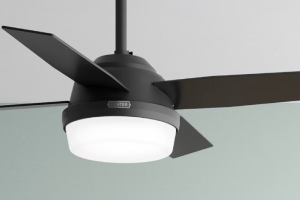
The Hunter Dempsey is a great example of this approach. With its low-profile design and sleek housing, the Dempsey works well in rooms with lower ceilings while still providing strong airflow. Its understated look allows it to blend seamlessly into modern interiors.

The Hunter Aerodyne represents the next step in fan technology. Designed with smart home compatibility and energy-efficient performance in mind, the Aerodyne offers powerful airflow while integrating with today’s connected homes. Its streamlined form reflects the growing trend toward fans that are both technologically advanced and visually minimal.

These fans show how modern Hunter designs focus on efficiency, convenience, and adaptable style.
Design Innovation: The Rise of the Fandelier
As home design trends continue to evolve, ceiling fans have begun taking on new forms. One of the most interesting innovations is the fandelier, a hybrid design that combines a decorative light fixture with hidden fan blades.
The Hunter Brookside Fandelier is a standout example of this category. With its enclosed blades and chandelier-inspired silhouette, the Brookside delivers airflow while serving as a stylish centerpiece for the room.

Fandeliers like the Brookside are particularly popular in bedrooms, smaller living spaces, and rooms where homeowners want both lighting and airflow in a compact fixture. This design reflects how ceiling fans continue adapting to new interior design trends while still serving their core purpose.
The Future of Airflow: Bladeless Innovation
Hunter’s design evolution doesn’t stop with traditional fans. As technology advances, the company continues exploring new ways to move air efficiently while creating visually distinctive products.
One of the most forward-thinking designs is the ZenTech fan, which uses bladeless airflow technology. Instead of traditional fan blades, ZenTech uses advanced engineering to circulate air quietly and efficiently while maintaining a sleek, modern appearance.

This innovative approach demonstrates how Hunter continues pushing the boundaries of what a fan can be, offering homeowners new options that blend technology, performance, and design.
140 Years of Airflow and Design
From water-driven fans in the late 1800s to smart and bladeless innovations today, Hunter Fan Company has spent more than a century refining the art of airflow.
Iconic models like the Hunter Original, decorative classics like the Seville, versatile favorites like the Builder Collection, and modern designs such as the Dempsey, Aerodyne, and Bennett all represent different chapters in the company’s history. Newer innovations like the Brookside Fandelier and ZenTech continue expanding what a ceiling fan can look like and how it can function in the home.
Through every era, one thing has remained the same. Hunter fans are designed to deliver reliable comfort while complementing the spaces people live in every day.
After 140 years, that commitment to airflow, craftsmanship, and thoughtful design continues to guide every new fan Hunter creates.